Is the Stock Market Open on New Year’s Eve?
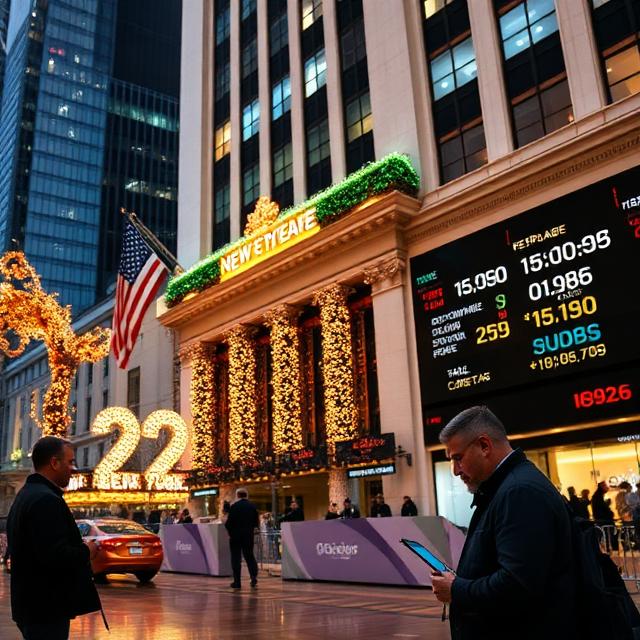
For investors wondering about stock market hours on New Year’s Eve, the answer is generally yes for equities. Both the New York Stock Exchange (NYSE) and Nasdaq remain open on Dec. 31, following their normal trading schedule from 9:30 a.m. to 4 p.m. ET.
However, some markets, such as the bond market and over-the-counter (OTC) trading, observe early closures. On New Year’s Eve, bond trading typically ends at 2 p.m. ET, so traders should plan accordingly.
U.S. Bond Market & OTC Trading
The U.S. bond market, including Treasury securities and corporate bonds, closes early on New Year’s Eve at 2 p.m. ET. Similarly, OTC trading, which is executed directly between parties rather than on a formal exchange, also wraps up early. These early closures can impact liquidity and pricing, so it’s important for traders to account for them in their strategies.
Pre-Market and After-Hours Trading
While the main exchanges remain open, some brokerages allow pre-market (before 9:30 a.m.) and after-hours trading (after 4 p.m.) on New Year’s Eve. Participation may be lower than usual due to holiday schedules, which can lead to higher volatility. Traders should verify their brokerage platforms to confirm these extended hours.
International Stock Market Hours on New Year’s Eve
Global markets often adjust their schedules around New Year’s:
- London Stock Exchange: Early closure at 12:30 p.m. London time (7:30 a.m. ET) on Dec. 31. Closed Jan. 1.
- Euronext Paris: Closes equity and derivatives trading at 13:55 CET (7:55 a.m. ET). Closed Jan. 1.
- Hong Kong Stock Exchange: Open Dec. 31 from 9 a.m. to 12 p.m. local time; closed Jan. 1.
- Tokyo Stock Exchange: Closed Dec. 31 and Jan. 1.
International traders should check each exchange’s holiday calendar to avoid unexpected disruptions.
Planning Trades Around Early Closures
If you are actively trading around New Year’s Eve, consider the following:
- Check market-specific schedules – equities, bonds, and OTC markets may have different hours.
- Adjust stop-loss and limit orders – ensure they align with shortened trading sessions.
- Expect lower liquidity – early closures often reduce trading volume, affecting price stability.
- Review international exposure – if you trade overseas, factor in foreign market hours.
Planning ahead can prevent missed opportunities or unintended losses due to holiday schedules.
FAQ: Stock Market on New Year’s Eve
Q: Is the stock market open on New Year’s Day?
A: No, the NYSE and Nasdaq are closed on Jan. 1 and reopen on Jan. 2.
Q: Do bond markets trade on New Year’s Eve?
A: Yes, but they close early at 2 p.m. ET.
Q: Can I trade after hours on Dec. 31?
A: Many brokers allow after-hours trading, but check your platform’s schedule.
Q: Are international markets open?
A: Some operate reduced hours; major Asian and European exchanges often close on Jan. 1.
Conclusion
Understanding stock market hours on New Year’s Eve is essential for both casual investors and professional traders. While equities generally trade during normal hours, early closures for bond and OTC markets, as well as international variations, require careful planning. By staying informed and preparing trades ahead of time, you can ensure a smooth transition into the New Year without missing opportunities.