Share Opening Price: What It Means and Why It Matters for Traders
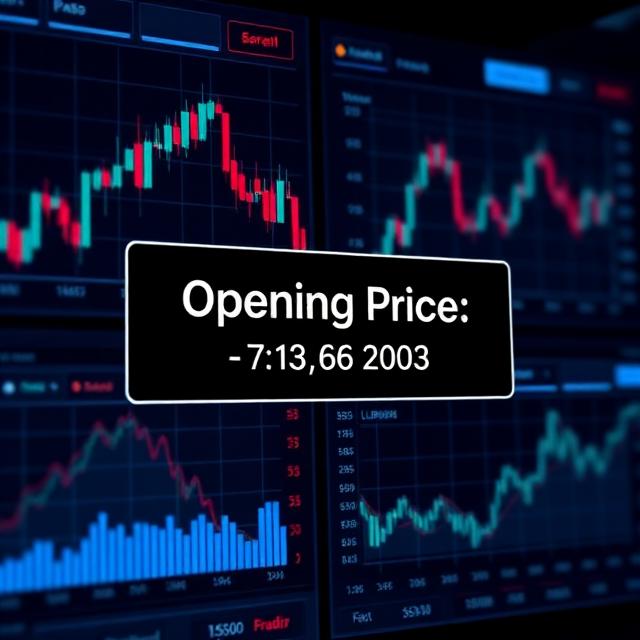
The share opening price is one of the most important reference points in the stock market. It represents the first price at which a stock trades when the market opens for the day—usually after hours of accumulated orders, sentiment shifts, and overnight news.
For active traders, investors, and analysts, the opening price provides early insight into market direction. It can signal whether buyers or sellers are in control, where volatility may occur, and how supply and demand have shifted since the previous session.
In this guide, you’ll learn exactly how the share opening price is determined, what factors influence it, and how it can be used to build profitable trading strategies.
What Is the Share Opening Price?
The share opening price is the first executed trade that occurs when the stock exchange officially begins its trading session.
While it appears as a simple number, this price results from an extensive process involving:
- Pre-market buy and sell orders
- Overnight economic and company news
- Global market sentiment
- Price discovery algorithms used by exchanges
- Real-time supply and demand balance
Unlike the closing price—which reflects how the market ends—the opening price reflects how traders react to information since the previous session closed.
How Stock Exchanges Determine the Opening Price
Different exchanges use slightly different systems, but most follow a structure similar to Nasdaq’s opening cross. This mechanism ensures that the opening price is fair, transparent, and based on order-matching logic.
1. Premarket Trading Activity
Before the market opens, limited-volume premarket trading allows traders to react to events such as:
- Earnings announcements
- Interest rate decisions
- Global market movement
- Breaking news
These early movements give exchanges and traders a preview of potential opening price direction.
2. Order Accumulation
As the opening time approaches, traders place:
- Market orders – executed at the best available price
- Limit orders – executed only at a set price
This buildup of orders creates an initial supply-demand snapshot.
3. Imbalance Data
Exchanges publish order imbalance indicators, showing whether more buyers or sellers are waiting.
This transparency helps reduce volatility at the open.
4. Price Discovery
The exchange’s algorithm searches for the price at which the maximum number of shares can be traded.
This ensures efficiency and fairness.
5. Opening Cross
At the official open—9:30 a.m. ET for U.S. markets—the opening cross executes thousands of orders simultaneously.
This determines the official share opening price.
Key Factors That Influence the Opening Price
The share opening price rarely remains the same as the previous day’s closing price. Here’s why:
1. Overnight News
Events such as:
- Earnings releases
- CEO resignations
- Product announcements
- Government economic reports
- Political events
can significantly shift investor expectations.
2. After-Hours Trading
After-hours markets typically have:
- Lower liquidity
- Wider spreads
- Higher volatility
These conditions allow even small trades to influence sentiment and potential opening gaps.
3. Global Market Movements
Markets often follow each other’s direction.
For example:
- If Asian or European markets rally overnight, U.S. markets may open higher.
- If foreign markets crash, expectations shift downward.
4. Institutional Orders
Large funds place overnight:
- Limit orders
- Stop orders
- Market-on-open (MOO) orders
These significantly affect opening supply and demand.
5. Economic Data Releases
Scheduled reports—such as inflation data, jobs reports, or GDP numbers—often cause sharp adjustments.
Why the Share Opening Price Matters
The opening price sets the tone for the trading day, offering insights into:
✔ Market Sentiment
Are traders optimistic or cautious?
✔ Overnight Momentum
Did the market gap up or down?
✔ Expected Volatility
Large opening gaps often signal high volatility throughout the morning.
✔ Technical Levels
The opening price frequently becomes an important:
- Support level
- Resistance level
- Reference point for intraday strategy
For day traders, the opening price is often more important than the closing price.
How to Anticipate Tomorrow’s Share Opening Price
While no forecast is perfect, traders rely on several tools to estimate the next day’s open.
1. After-Hours and Premarket Trends
If a stock rises after hours without major news, it may open higher the next day.
2. International Market Sentiment
For U.S. traders:
- Japan opens at 7:00 p.m. ET
- Europe opens as early as 3:00 a.m. ET
Strong overseas sessions often influence U.S. opening levels.
3. Earnings and News Monitoring
Scheduled events like earnings releases often dictate the direction of the next day’s open.
4. Futures Markets
Index futures (e.g., S&P 500 futures) trade nearly 24 hours. These often hint at the market’s opening bias.
Trading Strategies That Use the Share Opening Price
The opening price isn’t just informational—it can be a powerful trading signal.
1. Gap Fade and Gap Fill Strategy
When a stock opens significantly above or below the previous close, a gap occurs.
Traders expect:
- Large gaps to partially or fully reverse
- Price to “fill the gap”
This is especially common in:
- Low-volume premarket gaps
- Gaps caused by overreactions
2. Premarket Trend Continuation Strategy
If a stock trends strongly premarket with volume:
- Traders ride the continuation after the opening bell
- Works best on high-liquidity stocks
3. The 10 a.m. Rule
Many traders believe the first 30 minutes set the day’s trend.
If momentum remains consistent until 10 a.m., the trend often continues.
4. Fading the Premarket Move
If a stock moves strongly against its peers premarket:
- Some traders fade the opening move
- Expecting it to return to the market’s overall trend
5. Opening Range Breakout (ORB)
Traders mark the first 5–30 minutes of trading.
If price breaks above or below this range, it may start a strong intraday trend.
Real-World Example of an Opening Price
Suppose a stock closed yesterday at $120.
Overnight, the company released positive earnings.
Premarket trading pushes the stock to $126.
At 9:30 a.m., after the opening cross, the stock opens at $125.80.
This opening price reflects:
- Antecedent premarket optimism
- Overnight buying pressure
- Adjusted supply and demand
- Institutional orders waiting at the open
Can You Buy a Stock at the Opening Price?
Yes. Traders can use a Market-On-Open (MOO) order.
This ensures your order is executed at the opening price, but the exact price is not guaranteed in advance.
Difference Between the Opening Price and the Closing Price
| Feature | Opening Price | Closing Price |
|---|---|---|
| Reflects | Overnight sentiment & premarket activity | End-of-day market consensus |
| Volume | Often high (institutional orders) | Often high (fund rebalancing) |
| Use Case | Early trend identification | Portfolio valuation, technical analysis |
| Volatility | Usually higher | Moderate but spikes near 4 p.m. |
Both are essential for understanding the full trading narrative.
How Traders Use Opening Prices in Strategy Planning
Traders rely on opening prices for:
- Identifying market direction
- Setting stop-loss or entry levels
- Spotting gaps or trend reversals
- Determining intraday support or resistance
Combined with indicators such as moving averages or RSI, the opening price becomes a powerful analytical tool.
Conclusion
The share opening price is more than just the first number on the chart—it’s a snapshot of overnight sentiment, institutional activity, and global market influence. Understanding how it’s formed and how it behaves helps traders anticipate early movements, capitalize on volatility, and build stronger intraday strategies.